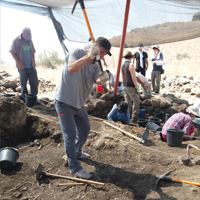
Marcello Fidanzio
Professor of Bible and Archaeology at the Faculty of Theology of Lugano, director of the Istituto di Cultura e Archeologia delle Terre Bibliche.
Chercheur associé at the École biblique at archéologique française of Jerusalem, he is in charge of the publication of the final report on the archaeological excavations at the caves of the Qumran area. He directed excavations at Qumran Caves 3Q and 11Q, and surveys at Caves 1Q, 2Q and 6Q.
He leads the research project “The Great Isaiah Scroll: A Biography” in collaboration with Hagit Maoz, curator of the Shrine of the Book. The book The Caves of Qumran (Leiden 2016), edited by him, won the “Best scholarly book in archaeology” award by the Biblical Archaeology Society in 2019. He is the founder and director of the summer school of archaeology “Gerusalemme” (www.archaeojerusalem.org).
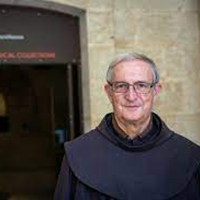
Eugenio Alliata, ofm
Archaeologist, professor of Christian archaeology at the Studium Biblicum Franciscanum in Jerusalem, he is director of the Archaeological Museum of the Flagellation (Terra Sancta Museum).
He has participated in numerous excavations in Israel and Jordan. He directed the excavations at Mount Nebo, at Kafr Cana, at the Latin Cemetery on Mount Zion.
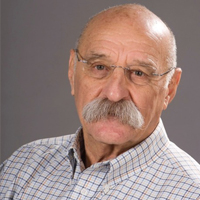
Dan Bahat
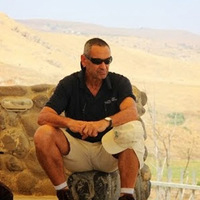
Michael Cohen
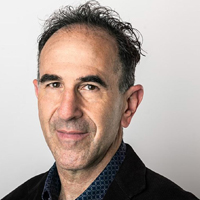
Haim Gitler
His main research areas include on the coinages of the late Persian period, but he has also worked on Hellenistic, Roman, Byzantine, Islamic, Crusaders and Modern time coinages.
He has taken part to a number of archaeological expeditions in Israel and Jordan, publishing numerous articles on their numismatic findings, in particular on the coins found at the excavations of the Jewish Quarter in Jerusalem.
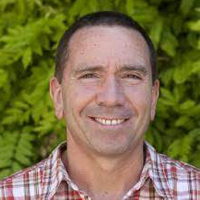
Uzi Leibner
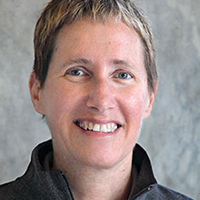
Jodi Magness
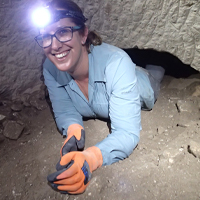
Orit Peleg-Barkat
Classical archaeologist specializing in Hellenistic and Roman art and architecture of the southern Levant. She heads the Classical Archaeology sub-department at the Hebrew University of Jerusalem and directs excavations at several sites, including the Byzantine village at En Gedi, a Roman temple at Horvat Midras, and a monumental structure south of the Temple Mount in Jerusalem.
Her research focuses on architectural decoration of Herodian Jerusalem and the Second Temple period. She has published extensively on topics including Herodian architecture, ancient synagogues, and Roman-period public buildings. Her major publications include Herodian Architectural Decoration and King Herod’s Royal Portico (2017) and the co-edited volume The Basilica in Roman Palestine (2021).
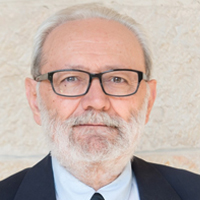
Émile Puech
Epigraphist, Directeur de recherche emeritus at the Center national de la recherche scientifique and professor emeritus at the École biblique et archéologique française in Jerusalem. He has published several volumes in the Discoveries in the Judaean Desert series, editio princeps of the Dead Sea Scrolls. He was the director of the Revue de Qumrân. The Académie des Inscriptions et Belles Lettres awarded him the “Charles Clermont-Ganneau Prize” for Semitic epigraphy. He is one of the leading experts on Qumran.
Emanuel Tov
Philologist, emeritus “J. L. Magnes Professor of Bible” at the Hebrew University of Jerusalem. He is a member of the Israel Academy of Science, a Corresponding Fellow of the British Academy and a member of the American Academy of Arts and Sciences. He was Editor-in-Chief of the Dead Sea Scrolls Publication Project. He has received numerous awards for his research, including the “Humboldt Research Prize”, the “Emet Prize in Biblical Research”, and the “Israel Prize”. He is one of the leading scholars of textual criticism of the Bible and the Dead Sea Scrolls.

Laura Re
Architect, passionate about art history, she has been involved in the design and setting up of a number of exhibitions in Lombardy and has collaborated on several occasions with the Faculty of Theology of Lugano, organizing conferences on biblical studies. Since 2009 she has been helping professor Marcello Fidanzio with the technical organization of the summer archeology courses in Jerusalem.


With the participation of








With the support of


To the organization have contributed